
Greta Perry · 12 October 2026
Strategies for Embedding Knowledge Capture Systems Within Expanding Digital Operations
Knowledge capture systems play a central role in organizations that scale their digital operations, as they help teams retain institutional expertise while workflows expand across platforms and regions. Research from digital transformation studies indicates that companies integrating these systems early see measurable improvements in project continuity and reduced duplication of effort. Data from industry reports show that expanding operations often generate fragmented information across tools, which makes structured capture methods essential for maintaining operational coherence.
Core Components of Effective Knowledge Capture
Organizations typically build knowledge capture around structured repositories, automated tagging mechanisms, and cross-functional access protocols. Studies from research institutions highlight that metadata standards developed in collaboration with teams lead to higher retrieval rates during audits or scaling phases. In October 2026, updates to digital infrastructure guidelines from regulatory bodies in the European Union emphasized interoperability requirements that align directly with these capture frameworks, prompting many firms to revise their internal documentation pipelines accordingly.
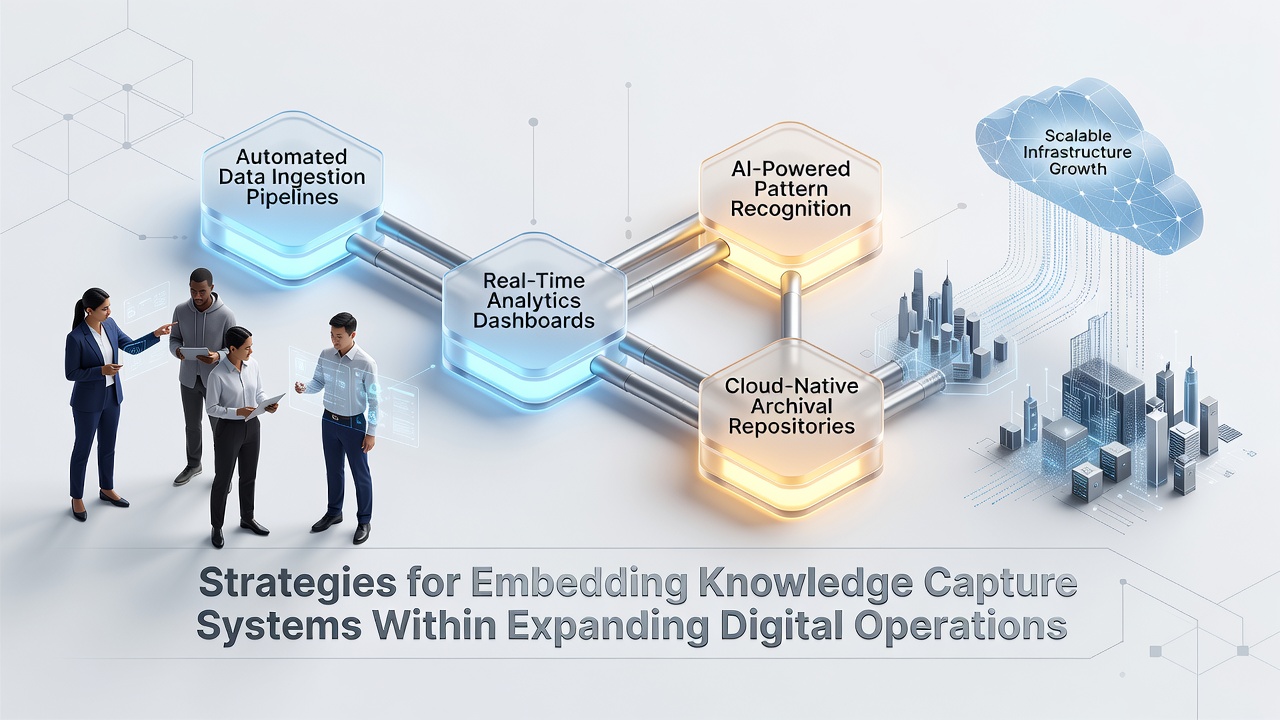
Automated logging features integrated into project management software allow real-time entry of decisions and processes, while manual review cycles ensure accuracy. Observers note that hybrid approaches combining both methods yield stronger results than either alone, particularly when teams operate across time zones and multiple cloud environments.
Integration Approaches for Growing Operations
Successful embedding begins with mapping existing data flows before introducing new capture layers. Analysts at academic centers have documented cases where phased rollouts, starting with high-impact departments, minimize disruption during growth spurts. This method lets teams test compatibility with current SaaS stacks and adjust tagging schemas based on actual usage patterns.
API connections between knowledge bases and operational dashboards provide seamless transfer of insights, and access controls tied to role-based permissions help maintain security as user numbers increase. Figures from Canadian digital economy assessments reveal that firms prioritizing these connections report fewer instances of knowledge loss during staff transitions or platform migrations.
Training and Adoption Frameworks
Embedding requires ongoing skill development so that staff treat capture as part of daily workflows rather than an added task. Programs developed by trade organizations often include scenario-based modules that demonstrate retrieval benefits during time-sensitive operations. Researchers have found that gamified elements in training platforms correlate with sustained participation rates over multi-quarter implementation periods.
Feedback loops built into the systems themselves allow users to flag gaps or suggest refinements, which accelerates refinement cycles. Data indicates that operations achieving at least 70 percent adoption within the first six months maintain higher consistency in documentation quality as headcount grows.
Measurement and Refinement Practices
Key performance indicators for knowledge capture include retrieval speed, contribution frequency, and error reduction in repeated processes. Reports from Australian government digital initiatives show that organizations tracking these metrics quarterly adjust their strategies more effectively than those relying on annual reviews alone. Visualization tools that display contribution heatmaps help managers identify underutilized areas and target additional support where needed.
Regular audits conducted by cross-team committees uncover outdated entries and validate alignment with evolving business objectives. These reviews become especially relevant during expansion phases when new product lines or markets introduce fresh terminology and procedural variations.
Conclusion
Strategies for embedding knowledge capture systems succeed when they align with existing digital infrastructure, incorporate user input throughout rollout, and rely on clear metrics for ongoing evaluation. As operations expand, the ability to retain and retrieve institutional knowledge directly influences efficiency and resilience across distributed teams. Organizations that apply these approaches systematically position themselves to handle increasing complexity without proportional increases in coordination overhead.