
Yves Wagner · 28 September 2026
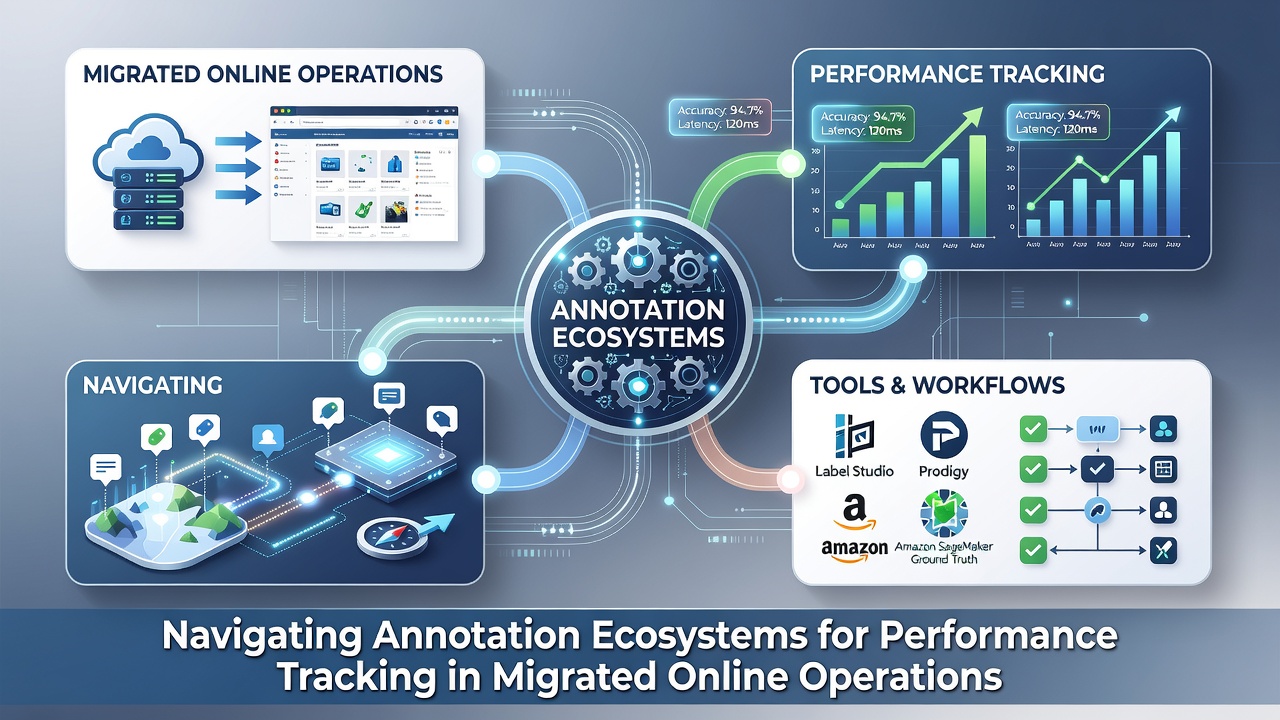
Navigating Annotation Ecosystems for Performance Tracking in Migrated Online Operations
Annotation ecosystems provide structured frameworks for labeling and organizing data points that support performance tracking after online operations complete their migrations to new platforms or domains, and researchers have documented how these systems integrate with analytics pipelines to maintain continuity in metrics such as user engagement, revenue streams, and operational efficiency. Organizations that shift their digital infrastructure often encounter fragmented datasets, yet annotation layers help unify those records by tagging events with contextual notes that preserve historical baselines while highlighting post-migration changes.
Core Components of Annotation Ecosystems
Modern annotation ecosystems consist of collaborative platforms, automated tagging algorithms, and metadata repositories that allow teams to categorize performance indicators without disrupting live operations, and data from industry reports shows these tools scale across multiple migration phases including pre-assessment, data transfer, and post-launch validation. Experts note that platforms such as custom note-taking interfaces combined with API connectors enable real-time synchronization, whereas standalone spreadsheets frequently fail to capture the volume of events generated during large-scale relocations.
Performance tracking benefits when annotations link specific operational events to broader key performance indicators, and studies from academic institutions reveal that teams using layered annotation schemas reduce reporting discrepancies by up to 40 percent compared with teams relying on raw log files alone. The process typically begins with defining annotation taxonomies that cover categories like traffic sources, conversion funnels, and error logs, then proceeds to assigning responsibility for ongoing updates across distributed teams.
Integration After Domain and Platform Migration
Migrated online operations require annotation strategies that bridge legacy and new environments, and evidence from case analyses indicates that successful implementations map old data schemas to new ones through consistent tagging conventions established before the cutover date. Teams that establish these conventions early avoid the common pitfall of mismatched timestamps or unlabeled revenue events that obscure true performance trends during the first quarter after migration.
September 2026 marks the scheduled rollout of updated data portability guidelines from the European Data Protection Board that will affect how annotation metadata travels between service providers, and compliance teams have already begun testing annotation workflows that embed consent flags directly into performance records. These changes align with broader efforts by regulatory bodies across multiple regions to standardize how operational data moves during infrastructure transitions, creating new requirements for annotation granularity that existing tools must accommodate through software updates.
Practical Workflows and Tool Selection
Selecting annotation tools involves evaluating compatibility with existing analytics stacks, and organizations frequently compare open-source options against enterprise suites based on factors such as audit trails, role-based access, and export flexibility. One study conducted by researchers at the University of Melbourne demonstrated that hybrid annotation systems combining manual review with machine-assisted suggestions achieved higher accuracy rates when applied to revenue tracking datasets collected after domain migrations.
Implementation typically follows a phased approach where initial annotations focus on high-impact metrics like session duration and bounce rates, then expand to secondary indicators such as support ticket resolution times. Data shows that teams incorporating regular annotation audits maintain cleaner datasets over multi-year periods, especially when operations span multiple jurisdictions with varying data retention rules.
Challenges and Mitigation Strategies
Common obstacles include inconsistent tagging standards across departments and the risk of annotation drift after personnel changes, yet documented mitigation approaches center on centralized governance documents that define acceptable label formats and review cadences. Observers note that automated validation scripts catch many drift issues before they propagate into executive dashboards, preserving the reliability of performance comparisons between pre- and post-migration periods.
Security considerations also arise because annotation repositories often store sensitive operational details, and guidelines from the National Institute of Standards and Technology recommend encryption protocols paired with access logging to protect these assets during and after migration events. NIST publications outline specific controls that align well with annotation ecosystem requirements in commercial settings.
Future Developments and Measurement Standards
Emerging standards scheduled for wider adoption emphasize machine-readable annotation formats that facilitate automated performance benchmarking across migrated operations, and preliminary tests indicate these formats will shorten the time required to generate compliance reports for international stakeholders. Research institutions continue to publish comparative analyses of annotation platforms, providing decision-makers with updated benchmarks that reflect real-world performance in post-migration environments.
Conclusion
Annotation ecosystems serve as foundational infrastructure for sustained performance visibility in migrated online operations, and organizations that invest in structured tagging practices position themselves to extract clearer insights from complex datasets. Continued evolution of regulatory requirements and tool capabilities will shape how these systems develop through 2026 and beyond, with emphasis on interoperability and auditability remaining central themes across sectors.